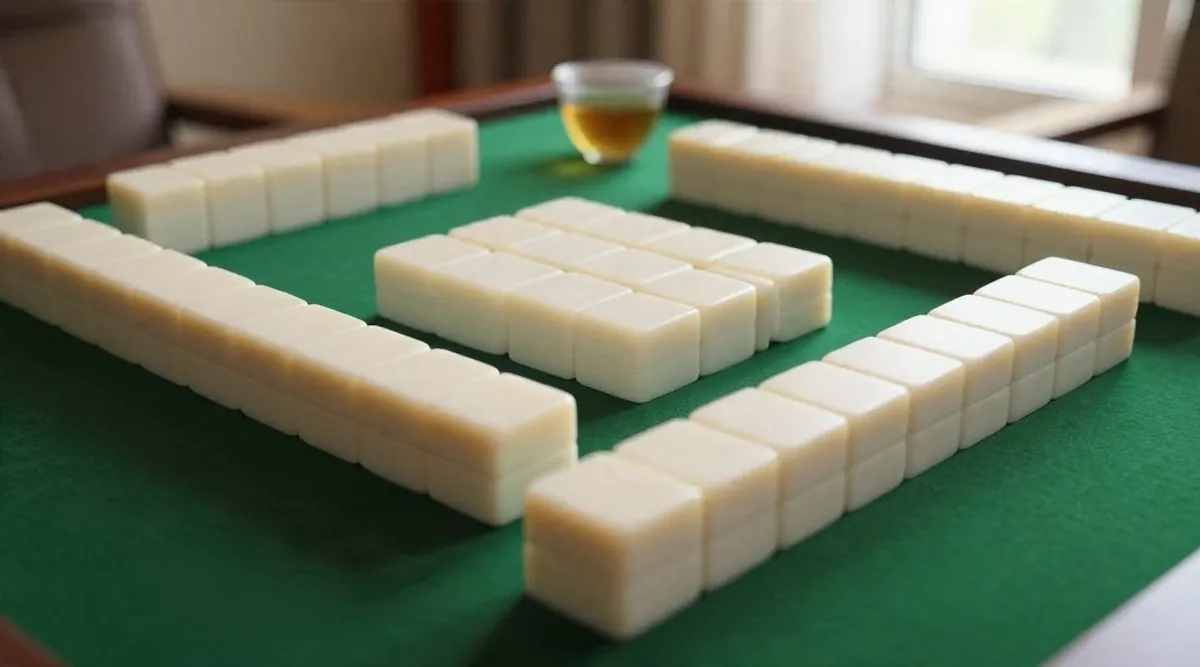
1The differences at a glance
Same family of tiles, very different goals: match the card (American) or build any four sets and a pair (Chinese).
| American mahjong | Chinese (Hong Kong) mahjong | |
|---|---|---|
| Tiles | 152 | 144 |
| Jokers | 8 jokers | None |
| Flowers | 8, used inside hands | 8 flowers and seasons, set aside as bonus tiles |
| Before play | The Charleston: players pass tiles to each other | No passing |
| Winning hand | Must match a hand printed on that year’s card | Any 4 sets + 1 pair |
| Runs like 4-5-6 | Not a set (hands use groups of the same tile) | Allowed (a "chow") |
| Taking a discard | Only for a pung, kong, quint or sextet, or to win | Also for a chow, from the player on your left |
| Kongs | Part of the 14 tiles, no extra draw | You draw a replacement tile |
| Scoring | Each hand has a set value on the card (e.g. 25¢) | Points ("faan") for features of the hand |
| Racks | Players use long racks with a pusher | Usually no racks |
| Where it is popular | United States, clubs and community centers | China, Hong Kong, Southeast Asia, worldwide |
2The tiles: jokers and flowers
American sets add 8 jokers, and their flowers are real parts of a hand, not bonus tiles.
Both games share the three suits (Bams, Craks and Dots, also called bamboo, characters and circles), the four Winds and the three Dragons. The American set adds 8 jokers. Jokers can stand in for any tile in a group of three or more, which is why American hands often contain big groups like quints (five of a kind).
In Chinese mahjong, flowers and seasons are bonus tiles: you put them aside and draw again. In American mahjong, all 8 flowers are the same, and many hands need them. The White Dragon also doubles as a zero in American “year” hands, such as 2026.
Read more: learn every American tile with the Tile Trainer and American joker rules.
3The goal: the card vs any valid hand
American players aim for a specific hand from the card. Chinese players can win with any hand that has four sets and a pair.
In American mahjong, the National Mah Jongg League publishes a new card every spring with more than 50 winning hands. Your 14 tiles must match one line exactly: the right numbers, the right suits, the right groups. Because the card changes every year, even experienced players keep learning.
In Chinese mahjong there is no card. Any hand of four sets (pungs, kongs or chows) plus one pair wins, and special patterns score extra points.
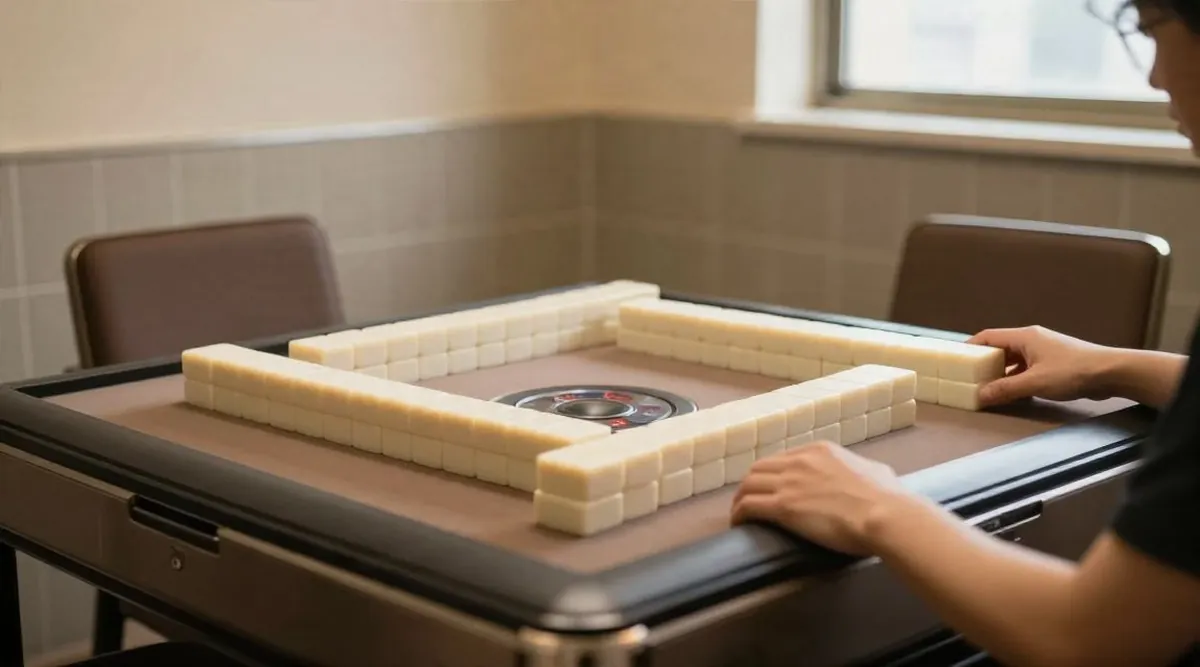
4The Charleston only exists in American mahjong
Before the first discard, American players pass tiles right, across and left. Chinese players start straight away.
The Charleston is the most famous American rule. Each player passes three unwanted tiles to the right, then across, then to the left. Players may agree to a second round and a small “courtesy pass”. It shapes your hand before play even starts. Full details: the Charleston, pass by pass.
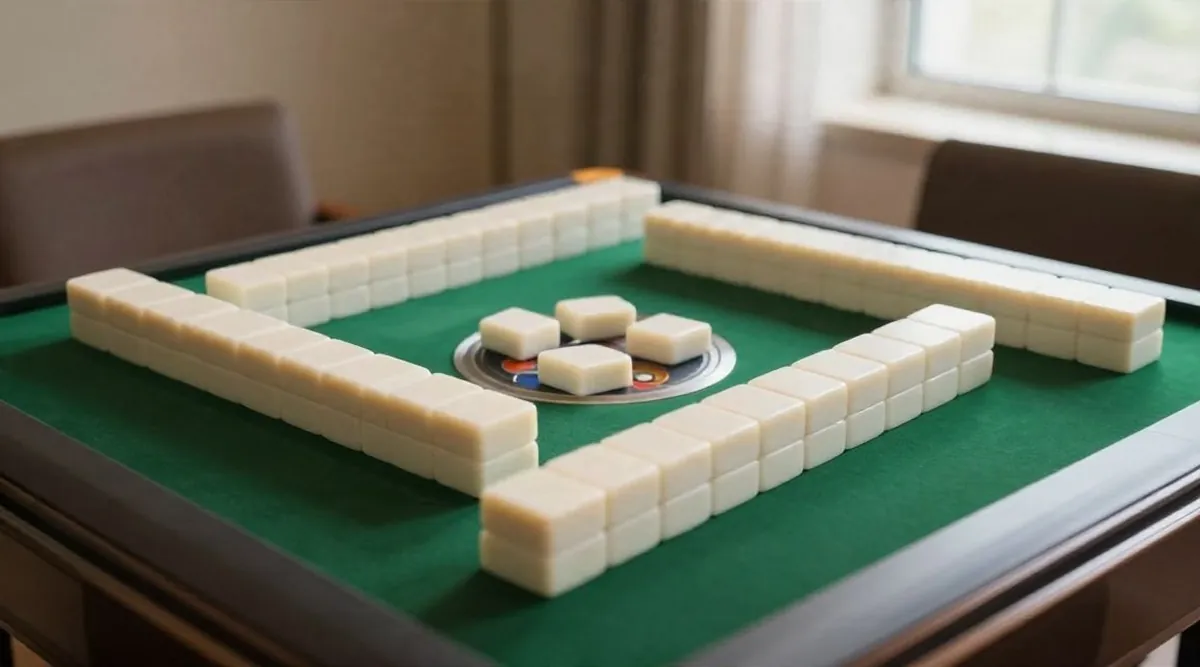
5Taking discards and scoring
American players call discards only for groups of three or more or to win, and are paid the value printed on the card.
| You want a discard for… | American | Chinese |
|---|---|---|
| A pung (three of a kind) | ✓ Yes | ✓ Yes |
| A chow (run like 3-4-5) | ✗ No | ✓ Yes, from the left player only |
| A pair | ✗ No, unless it wins | ✗ No, unless it wins |
| Mahjong | ✓ Yes | ✓ Yes |
When you win an American game, the others pay you the value written on the card, with extra for winning on your own draw or with no jokers. Chinese mahjong counts points (faan) for things like all one suit or all pungs, and the table agrees how points turn into money. See how paying works in American mahjong and the rules for calling tiles.
6Which one is harder to learn?
Most beginners learn the basic turns of either game in an afternoon. American mahjong is easier to score but needs you to learn the card.
- American is easier to score: the value is printed next to each hand, so there is nothing to add up.
- American is harder at first because you must read the card and pick a target hand from dozens of choices, and the card changes every year.
- Chinese is easier to start building hands (any four sets and a pair), but scoring systems differ a lot between regions and families.
If you already play Chinese mahjong, the big things to learn are the jokers, the Charleston and the card. Everything else will feel familiar.
7What about Japanese (riichi) and other styles?
Riichi is a Japanese style with 136 tiles, no flowers or jokers, and a rule that a hand needs at least one scoring pattern.
| Style | Tiles | Jokers | Big idea |
|---|---|---|---|
| American | 152 | 8 | Match a hand on the yearly card |
| Hong Kong / Cantonese | 144 | 0 | Four sets and a pair, simple point scoring |
| Japanese riichi | 136 | 0 | Declare “riichi”, need a scoring pattern (yaku), bonus “dora” tiles |
| Chinese Official (MCR) | 144 | 0 | Tournament rules with 81 scoring patterns |
Mahjong solitaire, the matching game on many phones, is a different thing altogether: one player removes matching pairs of tiles from a pile.
Questions people ask
What is the difference between American mahjong and Chinese mahjong?
American mahjong uses 152 tiles including 8 jokers, begins with the Charleston tile pass, and every winning hand must match a hand on a yearly card. Chinese (Hong Kong) mahjong uses 144 tiles with no jokers, has no passing, and any hand of four sets plus a pair wins, including runs like 3-4-5.
Is American mahjong harder than Chinese mahjong?
American mahjong is easier to score because each hand’s value is printed on the card, but harder at first because you must learn the card, which changes every year. Chinese mahjong is easier to start building hands but has more varied scoring.
Can you play American mahjong with a Chinese set?
Not fully. A Chinese set has no jokers, and American hands need them. You can add 8 jokers (blank tiles with stickers work) and use the flowers as American flowers.
Why does American mahjong have jokers?
Jokers were added in the American game in the 20th century to make the strict card hands easier to complete. They replace any tile in a group of three or more, but never in a pair or a single.
Do you use runs (chows) in American mahjong?
No. American hands use pairs and groups of identical tiles (pungs, kongs, quints). A hand may need consecutive numbers, like 3-4-5, but each number appears as its own group.